
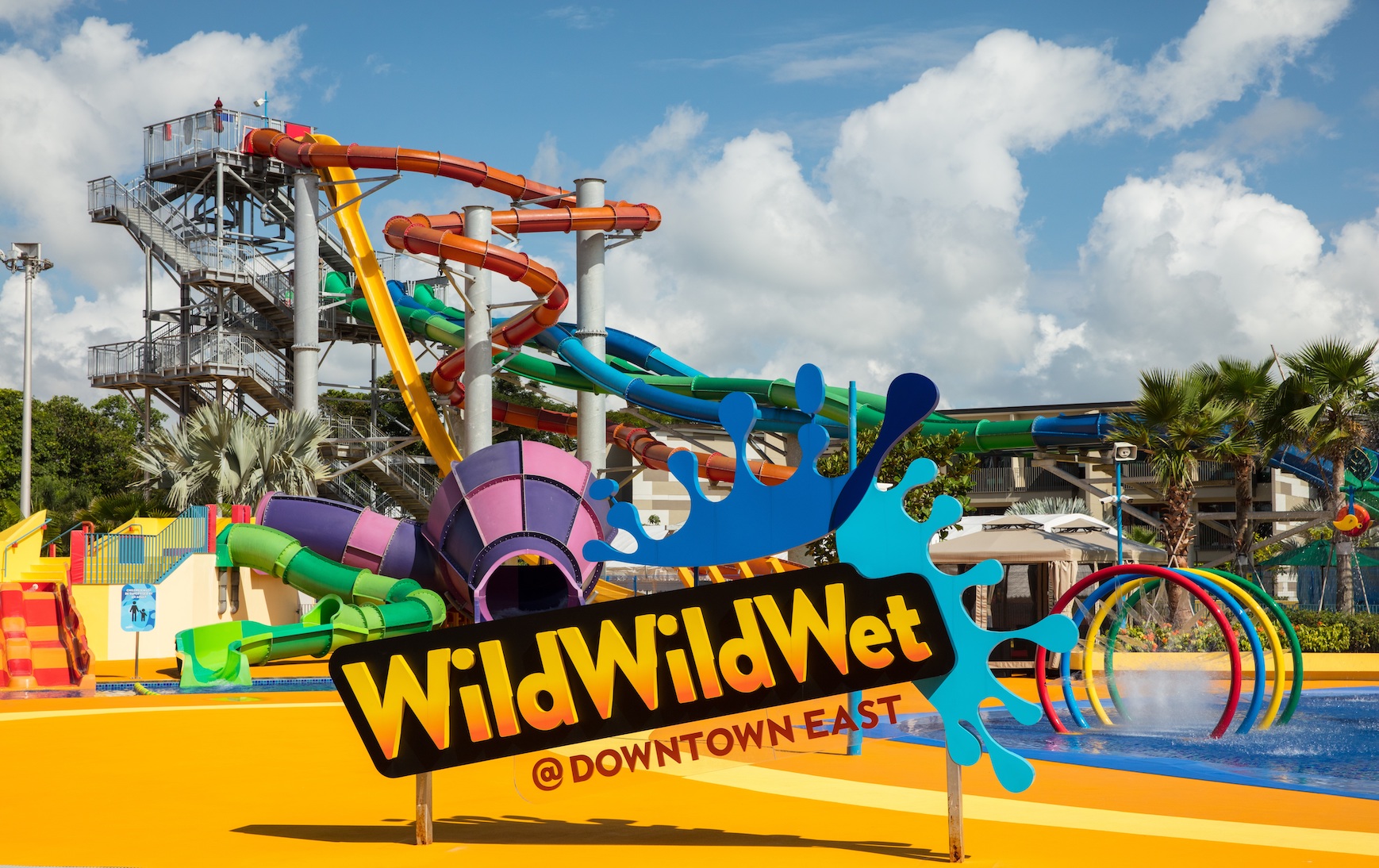
Wild Wild Wet Singapore is one of the country’s largest water parks, with slides, a wave pool and a lazy river built for families. The rides are safe when used properly, but a water park is not a supervised swimming lesson — the water is busy, moving and often deeper than children expect. The single best thing you can do before visiting is make sure weaker swimmers are genuinely water-confident, and keep them within arm’s reach in the pools.
I get asked about places like this a lot, usually by parents whose kids are still learning to swim. Water parks are brilliant fun. They are also where a lot of near-misses happen, precisely because everyone assumes a fun environment is automatically a safe one. This is the practical version: what to expect, how to prepare, and how to keep the day enjoyable rather than stressful.
What Wild Wild Wet Offers
The park mixes high-energy attractions with gentler family zones. Broadly you will find fast body and tube slides for thrill-seekers, a wave pool that periodically switches from calm to rolling surf, a lazy river for drifting around, and shallow interactive play areas designed for younger children. That range is the appeal — there is something for nervous toddlers and for teenagers chasing the steepest drop — but it also means one family can be spread across very different levels of risk at once.
Who Each Zone Suits
| Zone | 可能适合 | Watch out for |
|---|---|---|
| Kiddie / splash play | Toddlers and non-swimmers | Slippery surfaces; still needs supervision |
| Lazy river | All ages, relaxed floating | Moving water; use the right-size float for kids |
| Wave pool | Confident swimmers | Deepens quickly; waves can knock children over |
| Body & tube slides | Older kids and adults meeting height rules | Fast run-outs into deeper water at the bottom |
The wave pool is the one to respect most. It looks like a beach, but the floor slopes and the surf can unbalance a child who was standing comfortably a moment earlier. Keep non-swimmers in the shallow edge and never let the crowd lull you into looking away.
How to Prepare Before You Go
- Be honest about swimming ability. A child who can only manage a width of the pool is not ready for the deep end of a wave pool.
- Build water confidence first. A few weeks of lessons before a big water-park trip pays off enormously — a child who can float and recover is far safer.
- Fit proper flotation for non-swimmers. Use a correctly sized, well-fitted life jacket where the park allows it, not an inflatable toy that can slip off.
- Agree a meeting point. Busy parks separate families fast; pick a landmark and a check-in time.
- Pack sun protection and water. Singapore sun plus a full day out dehydrates and burns quickly.
Staying Safe During the Day
- Assign a designated watcher. One adult whose only job is watching the kids in the water, swapping every 20–30 minutes so attention stays sharp.
- Arm’s-reach rule for non-swimmers. Close enough to touch, every second they are in the water.
- Obey height and age limits on slides. They exist because of how each ride ends, not to spoil the fun.
- Read the run-out depth at the bottom of slides. Some deliver you into water over a child’s head.
- Take breaks. Tired children make poor decisions in water; rest and rehydrate before the next round.
Common Mistakes Parents Make
- Assuming lifeguards are watching your child specifically. They scan the whole crowd; your child is your responsibility.
- Trusting armbands and inflatable toys as safety devices. They are not — they can deflate, slip or drift away.
- Letting a weak swimmer follow stronger siblings into deep zones. Keep them where their ability matches the water.
- Overestimating a child because they had lessons once. Confidence fades without practice.
The Real Preparation Is Learning to Swim
A day at the water park is far more relaxing when your child can actually swim. Even a short block of lessons that covers floating, recovering to a stand, and a few metres of independent movement transforms how safe — and how much fun — a trip like this is. If you are starting out, options include swimming lessons in Singapore, one-to-one 私人游泳课程,而 lessons at your condo pool for convenient regular practice. For general water-safety information, ActiveSG is a useful reference.
安全优先
Treat every water-park pool as deeper and busier than it looks. Non-swimmers stay in shallow zones with a well-fitted life jacket and an adult within arm’s reach. Never let children play breath-holding or underwater-distance games in the pools — shallow-water blackout can cause a swimmer to lose consciousness without warning. Follow all posted rules, respect the lifeguards, and never mix alcohol with swimming or slides. When in doubt, choose the gentler zone.
常见问题
Is Wild Wild Wet suitable for non-swimmers?
Yes, in the shallow play areas and lazy river with proper supervision and flotation. Non-swimmers should stay out of the deeper end of the wave pool and off slides with deep run-outs.
What age is appropriate for the slides?
Each slide has its own height and age requirements posted on site. Follow them exactly — they reflect how the ride ends and how deep the water is at the bottom.
Are lifeguards enough to keep my child safe?
Lifeguards are essential but they monitor the whole crowd. Your child still needs a dedicated adult watching them, especially in the wave pool.
Should my child have swimming lessons before we visit?
It helps a great deal. A child who can float, recover to a stand and move a few metres independently is far safer and enjoys the day more.
Is the wave pool safe for young children?
Only in the shallow edge, with an adult within arm’s reach. The floor slopes into deep water and waves can knock small children off their feet.
What should I pack?
Sun protection, drinking water, a well-fitted life jacket for non-swimmers, and a plan for a meeting point in case anyone gets separated.


发表评论