

Water Polo: The Sport and a Serious Swim Workout
Water polo is a team sport played in deep water, where two teams tread water using an eggbeater kick and pass, dribble, and shoot a ball to score in the opponent’s goal. It is also one of the toughest swim workouts there is, building endurance, leg strength, and core control while you play. It is a full-contact sport, so it demands solid swimming and a realistic view of the physical side.
As a coach, I rate water polo highly for two reasons: it is a genuinely exciting game, and it turns fitness swimming into something you barely notice you are doing because you are focused on the ball. Here is what it involves and how to start.
What Makes Water Polo Special
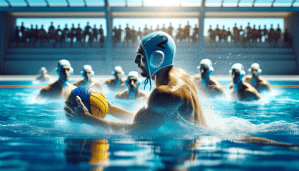
Water polo is played in a pool too deep to stand in, which means players never stop moving. You tread, swim, wrestle for position, and shoot, all without touching the bottom. That constant demand is what makes it such a complete workout, and it is why polo players tend to be strong, well-conditioned swimmers. The ball handling on top of all that is genuinely skilful, done one-handed while the other arm and the legs keep you afloat and balanced.
The Eggbeater Kick, the Foundation of the Game
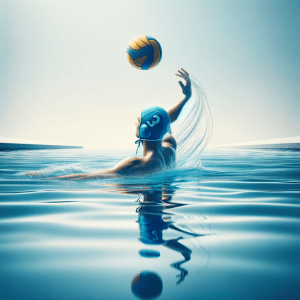
The single most important skill in water polo is the eggbeater kick. Instead of kicking both legs together, you rotate each leg in an alternating circular motion, one clockwise and one anticlockwise, like the beaters of an egg whisk. This keeps you stable and high in the water without your hands, so you can pass and shoot. Done well, it lets a player rise out of the water to shoot or block. It takes time to learn, and it is worth practising on its own before you add the ball.
Water Polo as Swim Conditioning
Even if you never play a competitive match, water polo drills are superb conditioning. The eggbeater builds leg and hip strength that carries over to every stroke, the constant treading develops serious cardiovascular endurance, and the sprint-and-recover rhythm of the game trains power. Many swimmers add a little polo work to break up the monotony of lap swimming. If you already do laps for fitness, our guidance on freestyle technique pairs well with polo conditioning.
What a Beginner Needs to Start
- Comfortable deep-water swimming. You must be at ease in water over your head and able to swim a solid freestyle. This is non-negotiable.
- Basic treading and the eggbeater. Start learning the eggbeater kick early; it underpins everything else.
- A ball and a wall. You can practise passing and one-handed catching against a wall or with a partner before joining a team.
- A supervised setting. Learn with a club, coach, or class rather than alone, since the game is physical and played in deep water.
- Basic kit. A polo ball, snug swimwear, and the ear-protecting caps players wear. Clubs usually provide caps and goals.
Water Polo Compared With Lap Swimming
| Aspect | Water polo | Lap swimming |
|---|---|---|
| Format | Team sport with a ball | Solo, continuous |
| Main leg skill | Eggbeater kick | Flutter or whip kick |
| Contact | Full contact | None |
| Fitness focus | Power, endurance, agility | Endurance and technique |
| Water depth | Deep, no standing | Any lane depth |
The Contact Side, Honestly

Water polo is a contact sport, and it is fair to know that before you start. Under the water, out of the referee’s sight, there is plenty of grabbing, pushing, and jostling for position. Above it, players take the occasional stray elbow or a ball to the face, and scratches and bruises are common. More significant injuries do happen, often to the shoulder from repeated shooting and to the head from contact. None of this should scare a sensible adult off, but it means you should play with proper coaching, learn to protect yourself, and wear the caps that guard your ears. If you pick up a knock that lingers, especially to the shoulder or head, get it assessed rather than playing on.
Common Mistakes for Beginners
- Skipping the eggbeater. Trying to play before you can tread hands-free leaves you sinking whenever you reach for the ball.
- Weak swimming base. Polo is exhausting; if your freestyle is shaky, the game will overwhelm you.
- Two-handed ball handling. Only the goalkeeper may use two hands. Learn to catch and pass one-handed early.
- Ignoring the physical side. Going in unprepared for contact leads to avoidable knocks. Learn positioning and protect yourself.
- Overdoing shooting volume. Too many hard shots too soon strains the shoulder. Build up gradually.
Getting Started in Singapore
Water polo has a real presence in Singapore’s swimming scene, though it helps to find a proper club or coached programme rather than trying to organise a game yourself. Sport Singapore and its ActiveSG network are the best starting point to find where the sport is played and coached near you. If you first need to build a stronger swimming base, our lessons can get you deep-water confident before you pick up a ball.
Frequently Asked Questions
Do I need to be a strong swimmer to play water polo?
Yes. You must be comfortable in deep water and able to swim a solid freestyle, because the game never lets you rest on the bottom.
What is the eggbeater kick?
An alternating circular kick, one leg turning each way, that keeps you high and stable in the water without using your hands. It is the foundation of the whole sport.
Is water polo a good workout?
It is one of the most demanding swim-based workouts, building endurance, leg strength, and agility all at once. Even the drills alone are excellent conditioning.
Is water polo dangerous?
It is a full-contact sport, so scratches, bruises, and the odd knock are normal, with shoulder and head injuries the more serious risks. Proper coaching, protective caps, and getting lingering injuries checked keep it sensible.
Can adults start water polo as beginners?
Yes, provided you can already swim confidently in deep water. Start with the eggbeater and basic ball skills through a coached programme.
What equipment do I need?
A water polo ball, snug swimwear, and the ear-protecting caps players wear. Clubs usually supply caps and goals for sessions.
The Bottom Line
Water polo is both a thrilling team game and one of the best conditioning tools a swimmer can use. Learn the eggbeater, build a strong swimming base, respect the contact side, and play in a coached setting. Do that and you get fitness, skill, and a genuinely fun sport all at once. To start with the swimming foundation, our coaches are here to help.


Leave a Reply