

How to Swim Breaststroke: Learning It From Scratch
Breaststroke has a rhythm and it is not negotiable: pull, breathe, kick, glide. Say it out loud while you swim. The commonest beginner fault is doing the arms and legs at the same time, which cancels the propulsion of both and leaves you bobbing on the spot. The second commonest is a frog kick from a wide, splayed knee, which is slower than the whip kick and considerably harder on the joint. Get the sequence, then get the kick.
Breaststroke is the stroke almost everybody learns first and almost nobody learns properly. It is also the stroke most likely to hurt you, which is a strange thing to say about the gentlest-looking one in the pool.
The Sequence
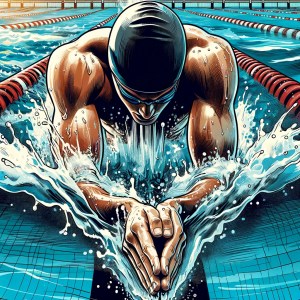
From a streamlined glide, arms forward, face down:
- Pull. Hands sweep outwards and then in, elbows high, ending under your chin. Small. Breaststroke arms are not a big movement.
- Breathe. The pull lifts your shoulders; let your head come up with them. Do not lift the head separately. Chin low, eyes forward and slightly down.
- Kick. Heels to backside, feet turned out, then whip them round and together. The head goes back down as the legs fire.
- Glide. Arms long, body flat, face down. Hold it for a beat and feel yourself travel.
One beat of glide. Count it. Beginners who skip the glide swim breaststroke as a continuous frantic churn and go nowhere.
The Kick Is the Stroke
Most of breaststroke’s propulsion comes from the legs, which is unusual and which is why the kick deserves most of your practice.
Draw the heels up towards the backside, keeping the knees roughly hip-width apart — not splayed wide. Turn the feet outwards so the soles face backwards. Then whip the legs round and snap them together, pressing the water backwards with the insides of the feet and shins.
The common error is a wide, frog-like knee action. It creates enormous drag, it produces less propulsion, and it loads the inside of the knee joint on every stroke. Narrow the knees. Turn the feet out. The power is in the ankle and the sweep, not in the width.
Practise it on your back, holding the wall, and with a board — fifty metres of kick for every fifty of full stroke, for the first month.
Where Beginners Go Wrong
| Fault | What it feels like | Fix |
|---|---|---|
| Arms and legs together | Bobbing, no forward travel | Say “pull, breathe, kick, glide” out loud |
| No glide | Frantic, exhausting | Count one beat with arms extended |
| Wide splayed knees | Slow; knee ache afterwards | Knees hip-width; turn the feet out |
| Huge arm pull | Shoulders tire, hips sink | Hands never pass the shoulders |
| Lifting the head to breathe | Hips drop, legs drag | Let the pull lift you; keep the chin low |
| Pointed toes on the kick | No purchase at all | Feet flexed and turned out |
Protecting Your Knees

Breaststroke knee is a real and common overuse problem, felt on the inside of the joint. It comes from the rotational load of the kick, and it is worsened by a wide knee position and by high volume too soon.
If the inside of your knee hurts during or after breaststroke, stop swimming breaststroke and see a physiotherapist. Do not push through it, do not swim it harder, and do not assume it will settle. It usually does not, and the fix — narrowing the kick, reducing volume, sometimes strengthening the hip — is straightforward when addressed early.
The same applies to hip and pubic bone pain, particularly during pregnancy, when ligament laxity makes the wide kick uncomfortable. Change stroke and get it assessed.
Safety
Learn in shallow, lifeguarded water with somebody watching. Never practise alone.
Breaststroke tempts swimmers into underwater pullouts and long submerged glides. Never extend these into breath-holding practice. Prolonged or repeated breath-holding, particularly after hyperventilating, causes shallow-water blackout — a silent, warningless loss of consciousness that has drowned strong swimmers in supervised pools. Surface, breathe, and never make a contest of staying under.
Enter feet first. Never dive into water you have not checked.
Floating aids are teaching tools, not safety devices. A child who cannot swim needs an adult within arm’s reach whatever they are wearing.
How to Practise It
- Kick with a board, feet flexed, watching that your knees stay narrow. Two lengths for every one of full stroke.
- Two kicks, one pull. Forces you to feel the glide and separates the limbs.
- Count your strokes per length. Fewer, at the same speed, means a better glide.
- Swim it slowly. Breaststroke rewards patience more than any other stroke.
- Alternate with freestyle. A pure breaststroke diet is hard on the knees.
Getting Help
Breaststroke is difficult to self-correct because you cannot see your own legs. This is the stroke where an hour with a coach on the deck genuinely changes things, and where a self-taught adult is most likely to have built a habit that will eventually hurt.
Nervous adults and anyone starting from nothing progress fastest in one-to-one private lessons; children generally do well in small-group swimming classes. If you are still working on floating and putting your face in the water, do that first. Practise between lessons wherever you can — see learning in a condominium pool — and use swimming near me to find a pool nearby.
For public learn-to-swim programmes, ActiveSG lists what is available.
Frequently Asked Questions
What is the correct breaststroke sequence?
Pull, breathe, kick, glide. Never simultaneously. The glide is a full beat with the arms extended and the face down.
Why do I not move forward?
Almost certainly you are pulling and kicking at the same time, so each cancels the other. Say the sequence out loud as you swim.
Is breaststroke bad for the knees?
A wide, splayed kick is. A narrow whip kick with the feet turned out is far kinder. Any knee pain means stop and see a physiotherapist.
Why are my hips low?
Usually the head. Let the arm pull lift your shoulders rather than lifting your chin, and press the face back down as the legs kick.
Should I glide for longer to swim further?
One clear beat is right. A very long glide means you decelerate to a stop and then have to accelerate again.
Is breaststroke a good stroke for beginners?
It is popular because the head stays up, which feels safe. It is technically harder than freestyle and rougher on the knees. Learn both.


Leave a Comment