

A beginner needs goggles that fit and a swimsuit built for chlorine. That is the entire list. Training aids — fins, paddles, snorkels, tempo trainers — do not fix technique; they amplify whatever your stroke already does, faults included. FINIS Swim makes good equipment for swimmers who already swim. Bought too early, short fins mask a weak kick, a pull buoy hides the sinking hips you most need to fix, and hand paddles drive a poor catch straight into your shoulder joint. Buy nothing for your first three months. Your swimming school will lend you whatever a lesson requires.
A new swimmer’s bag is nearly always fuller than a national squad member’s. That is the wrong way round, and it costs money as well as progress.
Scuba Fins and Swim Fins Are Different Things

This is the confusion the original version of this article encouraged, so let us be plain about it.
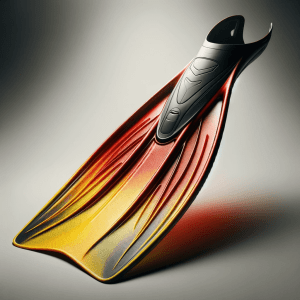
Scuba fins are long and stiff. They are built to push a diver and their tank at a slow leg cadence. In a pool they wreck your kick timing and cramp your calves within a length.
Short training fins are flexible and stubby. They let a swimmer kick at close to their natural rhythm with a little more purchase, they raise the hips so you can feel a flat body position, and they gradually improve ankle flexibility.
Do not train in scuba fins. If a shop sells you a pair for lap swimming, go elsewhere.
What to Buy, and When
| Item | Buy it when | Why not sooner |
|---|---|---|
| Goggles that fit | Immediately | Nothing matters more, and they cost little |
| Chlorine-resistant suit | Immediately | Fashion swimwear dies in a season |
| Swim cap | Immediately, if required | Many pools insist |
| Short training fins | Once you can swim a length | Earlier, they do the work your body should |
| Centre-mount snorkel | When working on body position | The most underrated aid there is |
| Pull buoy | Once your hips ride high unaided | It fakes the body position you need to build |
| Hand paddles | Only after a coach approves your catch | They load the shoulder on every stroke |
| Tempo trainer | Once your stroke count is stable | Otherwise you spin your arms and go nowhere |
| Monofin | Rarely, for butterfly work | Specialist tool, easy to misuse |
The Goggle Test, Which Costs Nothing
Take the strap out of the way. Press each eyecup gently into its eye socket. Let go and count.
If they hold for two or three seconds before dropping, the gasket shape matches your face and they will not leak. If they fall immediately, no strap tension will save them.
Then tighten the strap only until the leak stops. Suction keeps the water out. The strap merely keeps the goggles on. Overtightening gives you rings around your eyes, a headache, and a leak that reappears at the first push-off.
Children need junior sizing. An adult goggle cannot seal on a smaller orbital bone, and a leaking goggle teaches a child to hate the water long before it teaches them to swim.
Paddles: The Aid That Injures Adults
A paddle increases the surface area of your hand, and therefore the load on your shoulder, several hundred times per session. If your catch is good, you build pull strength. If your elbow drops — as almost every self-taught adult’s does — you drive that fault into the joint, repeatedly.
Swimmer’s shoulder is an overuse injury. It does not respond to pushing through. If your shoulder aches, take the paddles out of the bag, reduce your volume, and see a physiotherapist.
Beginners do not need paddles. Not small ones, not for a few lengths, not at all.
Common Mistakes
- Buying scuba fins for the pool. Wrong blade, wrong cadence, guaranteed cramp.
- Buying equipment instead of lessons. A coach on the deck beats a bag of gear, every time.
- Living in a pull buoy. It gives you the hips of a good swimmer without you having earned them.
- Paddles early, or paddles large. The fastest route to a shoulder injury in adult swimming.
- Wearing fins for a whole session. Take them off and check your hips have not sunk.
- Leaving gear in a hot car. Heat perishes silicone faster than chlorine does.
- Buying children training aids. They need water time, not equipment.
Safety
A centre-mount snorkel makes it easy to swim with the head down, which is exactly why some swimmers start experimenting with underwater lengths. Do not. Prolonged or repeated breath-holding, particularly after hyperventilating, causes shallow-water blackout: a silent, warningless loss of consciousness that has drowned strong swimmers in lifeguarded pools. Never practise it, never make a game of it with children.
Floating aids of every kind — armbands, rings, noodles, kickboards — are teaching tools, not safety devices. A child who cannot swim needs an adult within arm’s reach regardless of what they are wearing.
Fins in a crowded public lane are a hazard to the swimmer behind you. Announce them, and swim at the back.
Swim where a lifeguard is on duty. If your shoulder or knee hurts, equipment is not the answer — a physiotherapist is.
Spend the Money on Coaching Instead
The single highest return available to a new swimmer is somebody watching them swim. You cannot see yourself, and a competent coach finds in ten minutes what you would never find in a year. A short course of private swimming lessons is usually cheaper than the equipment people buy to avoid taking one, and group swimming classes supply aids for you to try before you commit.
Start with freestyle for beginners, then build endurance with our beginner swimming routine. Once you swim lengths comfortably, the equipment that genuinely helps is set out in when fins and paddles actually help. To find a pool nearby, use swimming near me.
Public pool timings are published by ActiveSG.
Frequently Asked Questions
What does a beginner actually need?
Goggles that pass the suction test, a polyester or PBT swimsuit, and a cap if the pool requires one. Nothing else for the first few months.
Can I use scuba fins for swimming training?
No. Long stiff blades slow your kick cadence, change your timing and commonly cause calf cramp. Buy short swim fins, later.
Are hand paddles good for beginners?
No. They amplify a poor catch directly into the shoulder joint. Wait until a coach tells you your catch is sound.
What is a centre-mount snorkel for?
It removes breathing from the equation so you can concentrate on body position. It is the most useful aid most adults never buy.
Should my child have fins and paddles?
No. Children need water time, not equipment. Aids are teaching tools and never safety devices.
How long does swim gear last?
Years, if rinsed in fresh water and dried in shade. Never leave it in a car; heat destroys silicone.


Leave a Reply