

Pool Companies Near Me: Building a Pool You Can Teach In
If lessons at home are part of why you are building a pool, say so at the design meeting — not after the concrete has set. A child learns to swim in water shallow enough to stand in with their chin clear, roughly ninety centimetres to a metre, reached by a long gentle slope, with an edge they can grab. Many handsome pools start at 1.2 metres, fall away sharply, and have a flush infinity edge with nothing to hold. They photograph beautifully. Nobody can teach in them.
We do not build pools and we name no contractors. We teach in pools, several thousand hours a year, and we can tell within a minute of standing at the edge whether the pool was designed by somebody who has ever taught a beginner.
The Four Questions to Ask a Contractor
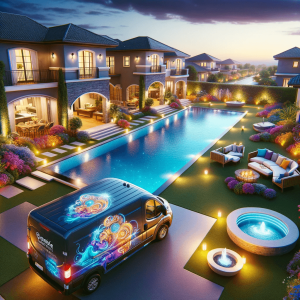
- How deep is the shallow end, and shallow for whom? A six-year-old needs to stand with shoulders clear and chin comfortably above the water. Give the contractor the height of the smallest person who will use the pool.
- How gradual is the slope? A long, gentle gradient lets a nervous learner walk out to their limit and walk back. A sudden shelf frightens them and is a genuine hazard.
- Is there an edge to hold? A rolled or lipped edge along at least one long side. Infinity and flush deck-level designs give a struggling swimmer nothing.
- What are the drain covers? Ask specifically for compliant anti-entrapment covers, and ideally dual drains or a safety vacuum release system. Suction entrapment is rare and catastrophic. Do not accept a vague answer.
What Makes a Pool Teachable
| Feature | Good for lessons | Poor for lessons |
|---|---|---|
| Shallow end | 0.9-1.0m; child can stand | 1.2m+ throughout |
| Gradient | Long and gradual | Sudden drop-off |
| Length | 15m or more for stroke work | Under 10m; three strokes and a wall |
| Edge | Grabbable lip or ledge | Infinity or flush edge |
| Steps | Wide, with a handrail | Ladder only |
| Temperature | Cool enough to exercise in | Heated to bath temperature |
| Shade | Some, over the shallow end | None, in full sun |
A short, deep, hot, edgeless pool is a lovely object and a bad classroom.
Fencing Is the Decision That Matters Most

Drowning is a leading cause of accidental death in young children in many countries, and most of those deaths happen in domestic pools during a brief lapse in supervision. Not during a swim. During a moment when nobody realised the child had gone outside.
The single most effective physical measure is a four-sided isolation fence — one that separates the pool from the house as well as from the street. A fence that uses the house as one side does very little, because the house is where the child comes from.
Specify a self-closing, self-latching gate, latch high and out of a child’s reach, opening outward. Test it monthly. Never prop it open, not even for an afternoon.
Alarms, covers and nets are supplementary layers. None replaces a fence, and no fence replaces an adult watching.
Living With a Home Pool
A private pool removes the lifeguard from the equation. You are the lifeguard.
- Drowning is silent. No shouting, no waving, no splashing. A child goes quiet and vertical and slips under.
- Stay within arm’s reach of any non-swimmer. Nominate one watcher who does nothing else, and hand the role over out loud.
- Armbands, rings and inflatables are toys. Remove them from the water when nobody is swimming — a floating toy draws a toddler to the edge.
- Never allow breath-holding games. Repeated breath-holding, particularly after hyperventilating, causes shallow-water blackout: a silent loss of consciousness that has drowned strong swimmers.
- No diving into a home pool. Almost none are deep enough. Feet first, always.
- Alcohol and supervision do not mix. If you are drinking, you are not the watcher.
- Learn CPR. Everybody with a pool should.
- No child is drown-proof, however many lessons they have had.
Checking a Contractor
- Ask to see two pools they built more than five years ago, and speak to those owners.
- Confirm the approvals and inspections required for your property.
- Ask specifically about drain covers, entrapment protection and fencing. Impatience with those questions is informative.
- Get maintenance, warranty, schedule and change-order terms in writing before you sign.
- Ask who manages water chemistry, and what happens when it goes wrong.
We quote no prices and recommend no companies. Both vary enormously by site, and neither is something a swimming school can verify for you.
Common Mistakes
- Designing for photographs. Infinity edges look extraordinary and offer nothing to grab.
- Too deep at the shallow end. Your children cannot stand, so they never relax.
- Too short. Under ten metres you cannot teach a stroke.
- Heated to bath temperature. Pleasant for ten minutes; unswimmable for thirty.
- Fencing as an afterthought. It is the most protective thing you will install.
- Believing an alarm replaces supervision. It does not.
Once It Is Built
A home pool makes lessons enormously more effective, because practice between sessions turns a taught skill into a reliable one. Children generally do well in small-group swimming classes; nervous children and adults progress faster in one-to-one private lessons and can join a group later. Residents of condominiums face many of the same constraints — see learning in a condominium pool. Children with additional needs should be matched with a specialist through special needs swimming. To find an instructor near you, start at swimming near me.
For national water safety guidance, Sport Singapore is the authoritative source.
Frequently Asked Questions
How deep should a family pool be?
Shallow enough at one end that a child can stand with their chin clear — typically 0.9 to 1.0 metres — with a gradual slope. Depth beyond about 1.8 metres serves little purpose at home.
How long does a pool need to be for lessons?
Fifteen metres is a workable minimum for stroke practice. Under ten metres you turn more than you swim.
Is a pool fence really necessary?
A four-sided isolation fence separating pool from house is the most effective physical protection available for young children. Install one regardless of what the local minimum requires.
Do pool alarms work?
A useful additional layer, an unreliable primary one. Fence first, supervise always, alarm as backup.
Should I heat the pool?
Modestly, if at all. Warm water is pleasant for play and unpleasant for exercise.
Which pool company should I use?
We do not recommend contractors. Ask the questions above, view old work, speak to past clients, and get everything in writing.


Leave a Reply